Floral Element: A Detailed Review for Business Branding and Merchandise Use
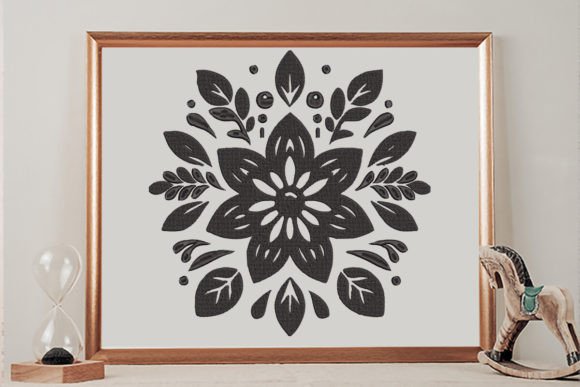
When I first encountered the Floral Element embroidery design, my immediate thought was how its whimsical charm could translate into versatile branding opportunities for small businesses. While the title suggests a simple floral motif, the description hints at broader potential beyond decorative stitching. As an embroidery designer evaluating this design for commercial use, I focused on its adaptability for patches, uniforms, tote bags, and other branded merchandise.
First Impressions: Professional Meets Playful
The Floral Element strikes a balance between professional polish and playful design. Its description mentions a "touch of whimsy and charm," which immediately suggests it's ideal for businesses wanting to appear approachable yet polished. Whether used as a chest logo on staff aprons or as a detail on tote bags, this design feels like it could elevate a brand's visual identity without appearing overly formal.
Real-World Business Applications
Let’s consider a local café that wants embroidered caps for baristas or a boutique looking to add a signature touch to gift tote bags. The Floral Element could serve as a subtle yet memorable emblem. For Etsy sellers and handmade brands, this design could be the finishing touch on product packaging or customer thank-you gifts. In custom apparel, it works well as a sleeve accent or embroidered patch, especially for businesses that want to convey warmth and creativity.
I tested the Floral Element in a few mock scenarios. On a mockup of a baker’s apron, the design added a softness that aligned well with a cozy, artisanal brand. When scaled down for a cap front, it maintained clarity, suggesting it could work for headwear branding. As a patch, it has the potential to be sewn onto uniforms, reusable bags, or even pet bandanas for niche brands.
Where to Use with Care
While the design is versatile, there are a few considerations for embroidery professionals. First, when scaling down for small patches or cap fronts, it’s important to check if the details hold up. Delicate outlines and stitch density can become problematic on curved surfaces or tiny spaces. If the design contains intricate outlines, thread color contrast and spacing between stitches should be carefully reviewed to ensure clarity after embroidery.
Dark fabrics may also affect the visibility of the design. Testing the Floral Element in black and white first is a smart move, especially when considering how it will appear on dark uniforms or textured materials like towels or canvas tote bags. Additionally, for items that will endure frequent washing—like staff uniforms or aprons—it’s crucial to use the right stabilizer and hoop size to maintain stitch integrity over time.
Impact on Brand Identity and Customer Perception
From a branding standpoint, the Floral Element has the potential to enhance visual consistency across merchandise. Its elegant yet playful aesthetic can help small businesses project a cohesive image that feels handmade but professional. When used across tote bags, embroidered patches, or even digital mockups for product listings, this design can become a recognizable part of a brand’s visual language.
For Etsy sellers and craft businesses, the design can elevate the perceived value of handmade products. A small embroidered detail on a linen pillow or boutique garment can make a big difference in customer trust and perceived quality. The key is to ensure the design is used consistently and appropriately for the product type.
Before moving into production, I recommend the following steps:
- Test in black and white first: to evaluate contrast and clarity.
- Check small patch sizes: to confirm that the design remains legible.
- Review thread color contrast: and ensure it complements the fabric it will be stitched onto.
- Inspect spacing and stitch density: , especially for detailed outlines.
- Confirm hoop size: to ensure compatibility with your embroidery machine.
- Test on real fabric: to see how the design performs on different textures.
- Use proper stabilizer: to avoid distortion, especially on stretchy or delicate materials.
- Create a printable mockup: for client approval before stitching begins.
- Compare it beside other design assets: to maintain visual consistency across branding materials.
- Confirm commercial licensing: before using the digital embroidery file for business purposes.
Final Thoughts for Small Business Branding
The Floral Element embroidery design is more than just a decorative motif—it’s a branding tool that, when used thoughtfully, can elevate small business merchandise. Whether you're creating embroidered patches for a local florist or adding a chest accent to uniforms for a boutique café, this design has the potential to become a signature brand element.
As embroidery designers, our job is to look beyond aesthetics and consider how each design functions in the real world. The Floral Element passes that test, offering both visual appeal and practical application for a variety of small business needs. Just remember to test, review, and confirm all technical details before production to ensure a flawless finished product.